
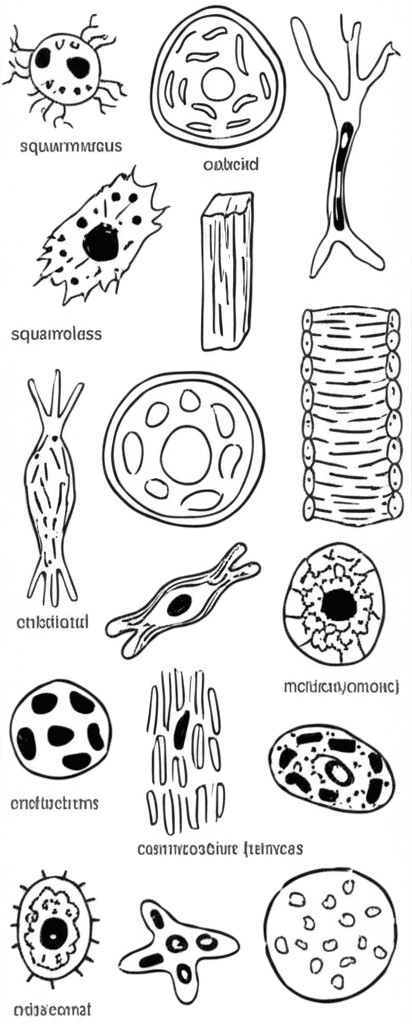
Introduction to Microscopic Anatomy (Histology)
Microscopic anatomy, also known as histology, is the study of the microscopic structure of tissues and cells. It is a vital branch of biology and medicine, as it helps us understand how the body functions and responds to disease. In this blog post, we will delve into the world of cells and tissues, exploring their structure, function, and importance in the human body.
What are Cells?
Cells are the basic building blocks of life, and they are the smallest units of the body that can function independently. They are incredibly diverse, with different types of cells performing different functions. For example, nerve cells transmit signals, while muscle cells contract and relax to produce movement.
What are Tissues?
Tissues are groups of similar cells that work together to perform a specific function. There are four primary types of tissues in the human body: epithelial tissue, connective tissue, muscle tissue, and nervous tissue. Each type of tissue has unique characteristics and functions, and they all play critical roles in maintaining the body's overall health.
Epithelial Tissue
Epithelial tissue is a type of tissue that forms the lining of many organs and glands in the body. It is composed of tightly packed cells that are connected by tight junctions, which help to prevent the passage of substances between cells. Epithelial tissue performs a variety of functions, including protection, secretion, and absorption.
Connective Tissue
Connective tissue is a type of tissue that provides support and structure to the body. It is composed of cells and extracellular matrix, a network of fibers and ground substance that surrounds the cells. Connective tissue plays a critical role in maintaining the body's shape and providing a framework for other tissues to attach to.
Muscle Tissue
Muscle tissue is a type of tissue that is capable of contracting and relaxing to produce movement. It is composed of muscle fibers, which are long, thin cells that contain myofibrils. Muscle tissue is essential for maintaining posture, moving the body, and regulating body temperature.
Nervous Tissue
Nervous tissue is a type of tissue that is specialized for communication and control. It is composed of neurons, which are cells that transmit signals, and glial cells, which provide support and protection to the neurons. Nervous tissue plays a critical role in controlling the body's functions, including movement, sensation, and cognition.
Conclusion
In conclusion, microscopic anatomy is a fascinating field that helps us understand the structure and function of cells and tissues in the human body. By studying the different types of tissues and their functions, we can gain a deeper appreciation for the complexity and beauty of the human body. Whether you are a student, a researcher, or simply someone interested in learning more about the human body, microscopic anatomy is an essential topic to explore.
Test Your Knowledge
Now that you've learned about Microscopic Anatomy (Histology): Cells and Tissues, test your understanding with these interactive flashcards. You can save them to your collection for later study!
📚 Study Flashcards
Test your knowledge with these interactive cards
Microscopic Anatomy Flashcards
Test your knowledge of cells and tissues with these interactive flashcards.
Want to study these cards?
Save to your collection and track your progress
What is the definition of histology?
#1What are the four primary types of tissues in the human body?
#2What is the function of epithelial tissue?
#3What is the composition of connective tissue?
#4What is the function of muscle tissue?
#5What is the composition of nervous tissue?
#6What is the function of neurons in nervous tissue?
#7What is the importance of studying microscopic anatomy?
#8💡 Study Tip
Try to answer each question before looking at the answer. Use the memory tips to create stronger mental connections!