
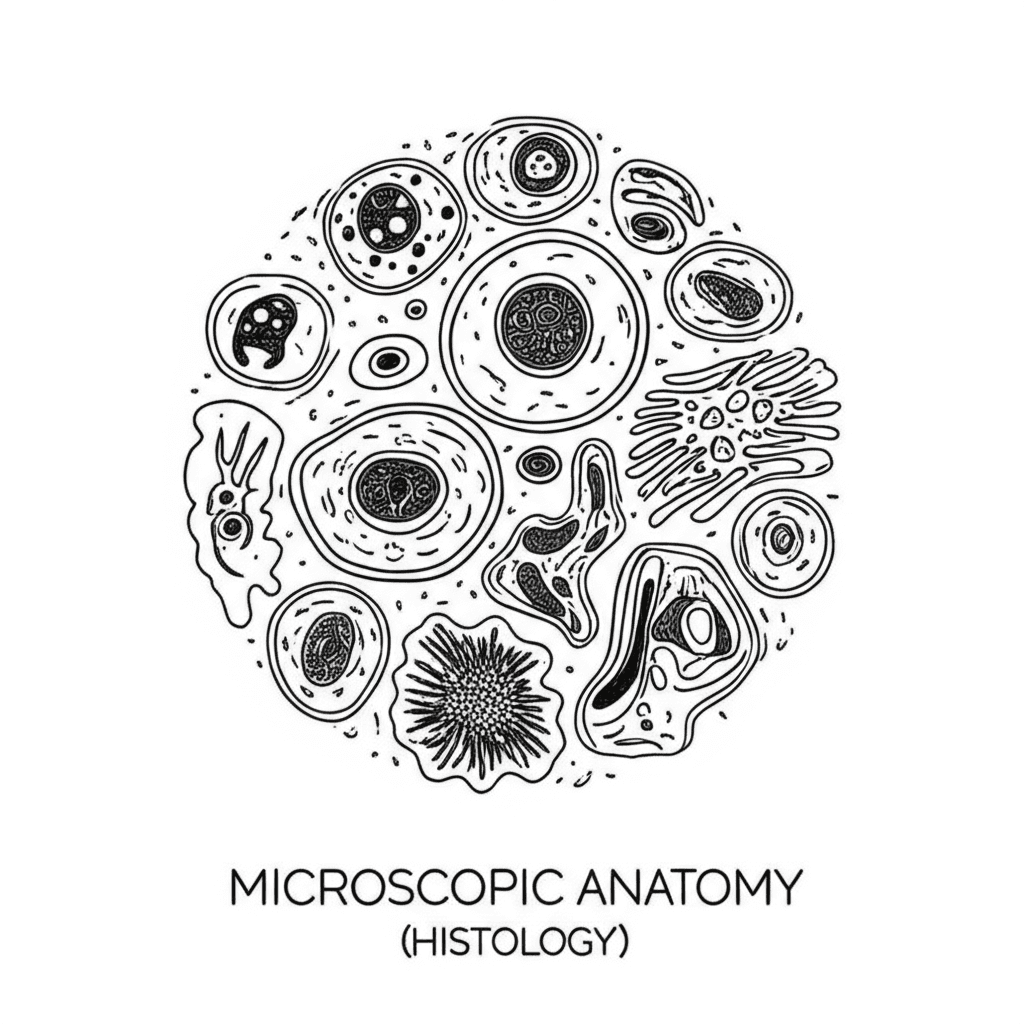
Introduction to Microscopic Anatomy
Microscopic anatomy, also known as histology, is the study of the structure and organization of tissues and cells at the microscopic level. This field of study is crucial for understanding how the body functions, responds to disease, and heals from injury. In this blog post, we will delve into the world of microscopic anatomy, exploring the different types of tissues, cells, and techniques used in histology.
Types of Tissues
There are four primary types of tissues in the human body: epithelial, connective, muscle, and nervous tissue. Each type of tissue has unique characteristics and functions.
- Epithelial tissue forms the lining of organs, glands, and other body surfaces. It protects the body from external damage and helps to regulate the exchange of substances.
- Connective tissue provides support, structure, and connectivity to the body. It includes bone, cartilage, fat, and blood.
- Muscle tissue is responsible for movement, contraction, and relaxation. There are three types of muscle tissue: skeletal, smooth, and cardiac.
- Nervous tissue is specialized for communication and transmission of signals. It includes the brain, spinal cord, and nerves.
Histological Techniques
Histologists use various techniques to prepare and examine tissue samples. These techniques include:
- Fixation: preserving the tissue sample to maintain its structure
- Sectioning: cutting the tissue sample into thin sections
- Staining: applying dyes to highlight specific features or structures
- Microscopy: examining the tissue sample using a microscope
Applications of Microscopic Anatomy
The study of microscopic anatomy has numerous applications in medicine, research, and education. It helps us understand the causes of diseases, develop new treatments, and improve our knowledge of the human body.
Conclusion
Microscopic anatomy is a fascinating field that reveals the intricate details of the human body. By understanding the structure and function of tissues and cells, we can gain insights into the workings of the body and develop new approaches to healthcare and research. Whether you are a student, researcher, or simply curious about the human body, microscopic anatomy is an exciting and rewarding field to explore.
Test Your Knowledge
Now that you've learned about Microscopic Anatomy (Histology), test your understanding with these interactive flashcards. You can save them to your collection for later study!
📚 Study Flashcards
Test your knowledge with these interactive cards
Microscopic Anatomy Flashcards
Test your knowledge of microscopic anatomy with these flashcards, covering key concepts and terminology.
Want to study these cards?
Save to your collection and track your progress
What is histology?
#1What are the four primary types of tissues?
#2What is the function of epithelial tissue?
#3What is fixation in histology?
#4What is the purpose of staining in histology?
#5What is the difference between skeletal and smooth muscle tissue?
#6What is the function of nervous tissue?
#7What is the importance of microscopic anatomy in medicine?
#8💡 Study Tip
Try to answer each question before looking at the answer. Use the memory tips to create stronger mental connections!