
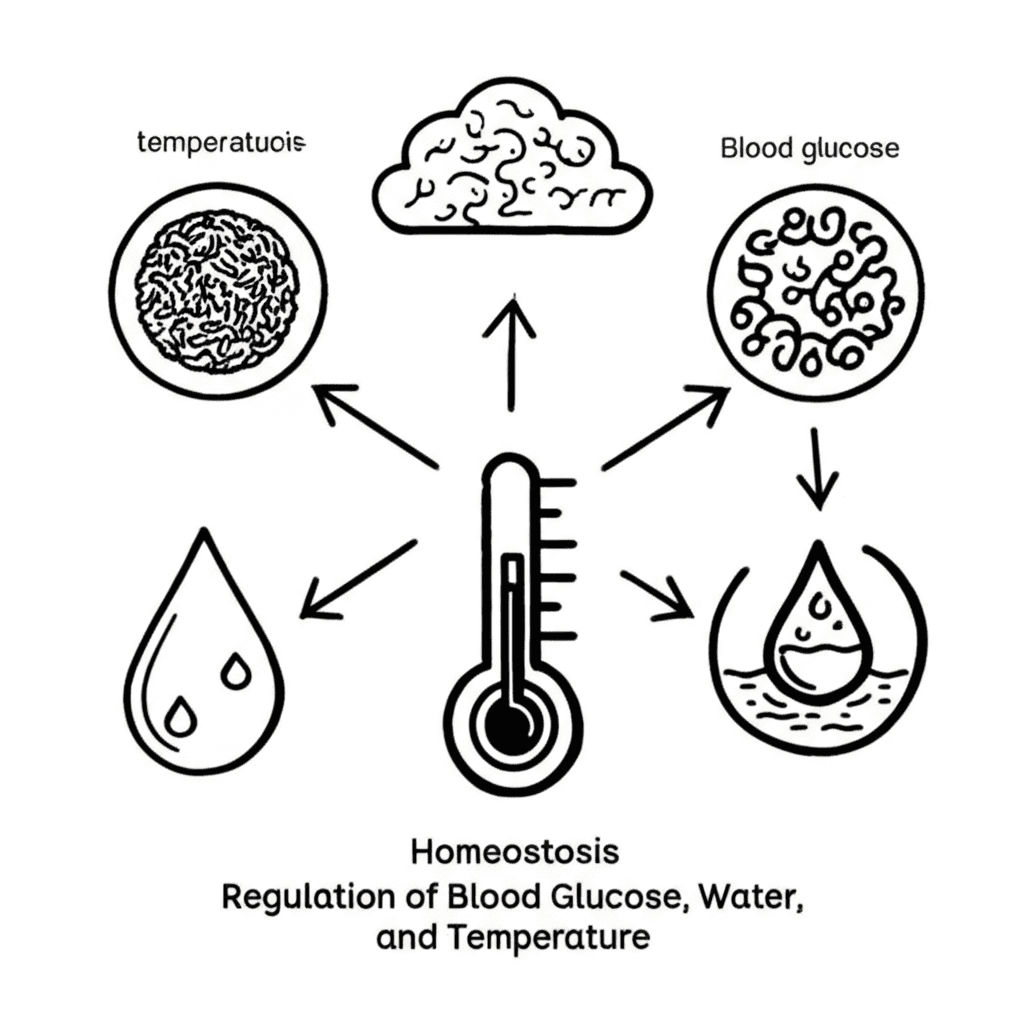
Introduction to Homeostasis
Homeostasis is the ability of the body to maintain a stable internal environment despite changes in external conditions. It is a vital process that ensures the proper functioning of the body's cells, tissues, and organs. In this blog post, we will explore the regulation of blood glucose, water, and temperature, and how homeostasis plays a crucial role in maintaining these essential processes.
Regulation of Blood Glucose
The regulation of blood glucose is a critical aspect of homeostasis. Blood glucose levels must be maintained within a narrow range to ensure proper cellular function. The body achieves this through the use of insulin and glucagon, two hormones produced by the pancreas. Insulin lowers blood glucose levels by facilitating the uptake of glucose by cells, while glucagon raises blood glucose levels by stimulating the release of glucose from stored glycogen.
Regulation of Water
The regulation of water is also essential for maintaining homeostasis. The body loses water through various means, such as sweating, urination, and respiration. To maintain proper hydration, the body must balance water loss with water intake. The kidneys play a crucial role in regulating water levels by adjusting the amount of water reabsorbed into the bloodstream.
Regulation of Temperature
The regulation of temperature is another critical aspect of homeostasis. The body must maintain a stable internal temperature to ensure proper cellular function. The hypothalamus acts as the body's thermostat, regulating temperature through various mechanisms, such as sweating and shivering.
Conclusion
In conclusion, homeostasis is a vital process that ensures the proper functioning of the body's cells, tissues, and organs. The regulation of blood glucose, water, and temperature are all critical aspects of homeostasis, and the body uses various mechanisms to maintain these essential processes. Understanding homeostasis is essential for A Level students, as it provides a foundation for further study in biology and medicine.
Key Terms:
- Homeostasis: the ability of the body to maintain a stable internal environment
- Insulin: a hormone that lowers blood glucose levels
- Glucagon: a hormone that raises blood glucose levels
- Hypothalamus: the part of the brain that acts as the body's thermostat
Test Your Knowledge
Now that you've learned about Homeostasis: Regulation of Blood Glucose, Water, and Temperature, test your understanding with these interactive flashcards. You can save them to your collection for later study!
📚 Study Flashcards
Test your knowledge with these interactive cards
Homeostasis Flashcards
Test your knowledge of homeostasis with these interactive flashcards.
Want to study these cards?
Save to your collection and track your progress
What is homeostasis?
#1What hormone lowers blood glucose levels?
#2What is the role of the kidneys in regulating water levels?
#3What is the function of the hypothalamus in regulating temperature?
#4What is the normal range for blood glucose levels?
#5What is the role of glucagon in regulating blood glucose levels?
#6What is the process by which the body loses water through the skin?
#7What is the term for the body's ability to maintain a stable internal temperature?
#8💡 Study Tip
Try to answer each question before looking at the answer. Use the memory tips to create stronger mental connections!