
Introduction to Enzymes
Enzymes are biological catalysts that speed up chemical reactions in living organisms. They are essential for various biological processes, including metabolism, DNA replication, and protein synthesis. In this blog post, we will delve into the structure, function, and regulation of enzymes, exploring their importance in biology and real-world applications.
Structure of Enzymes
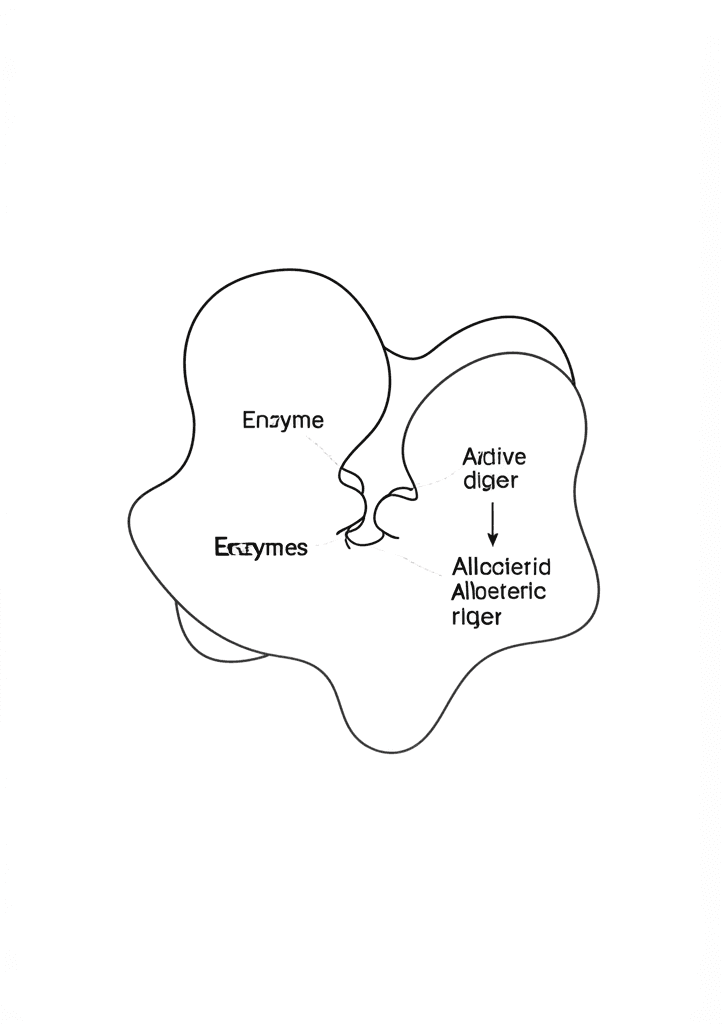
Enzymes are proteins composed of amino acids, with a unique three-dimensional structure that enables them to bind to specific substrates. The active site of an enzyme is the region where the substrate binds, and it is responsible for the catalytic activity of the enzyme. Enzymes can be classified into different types, including oxidoreductases, transferases, hydrolases, lyases, isomerases, and ligases.
Function of Enzymes
Enzymes play a crucial role in various biological processes, including:
- Metabolism: Enzymes regulate metabolic pathways, such as glycolysis, gluconeogenesis, and the citric acid cycle.
- DNA replication: Enzymes like DNA polymerase and RNA polymerase are essential for DNA replication and transcription.
- Protein synthesis: Enzymes like aminoacyl-tRNA synthetase and peptidyl transferase are involved in protein synthesis.
Regulation of Enzymes
Enzyme activity can be regulated through various mechanisms, including:
- Allosteric control: Enzymes can be activated or inhibited by binding of allosteric effectors to specific sites.
- Covalent modification: Enzymes can be modified through phosphorylation, ubiquitination, or proteolytic cleavage.
- Gene regulation: Enzyme expression can be regulated through transcriptional control or post-transcriptional control.
Real-World Applications of Enzymes
Enzymes have numerous applications in:
- Biotechnology: Enzymes are used in genetic engineering, bioremediation, and biofuel production.
- Medicine: Enzymes are used as drugs or diagnostic tools for various diseases.
- Food industry: Enzymes are used in food processing, brewing, and baking.
Conclusion
In conclusion, enzymes are essential biological molecules that play a crucial role in various biological processes. Understanding the structure, function, and regulation of enzymes is vital for appreciating their importance in biology and their applications in real-world industries.
Test Your Knowledge
Now that you've learned about Enzymes: Structure, Function, and Regulation, test your understanding with these interactive flashcards. You can save them to your collection for later study!
📚 Study Flashcards
Test your knowledge with these interactive cards
Enzymes Flashcard Set
A set of flashcards covering the key concepts of enzymes, including structure, function, and regulation.
Want to study these cards?
Save to your collection and track your progress
What is the role of the active site in an enzyme?
#1What are the different types of enzymes?
#2What is allosteric control?
#3What is the role of covalent modification in enzyme regulation?
#4What is the difference between competitive and non-competitive inhibition?
#5What is the Michaelis constant (K_m)?
#6K_m) is a measure of the binding affinity of an enzyme for its substrate.What is the role of enzymes in biotechnology?
#7What is the importance of enzymes in medicine?
#8💡 Study Tip
Try to answer each question before looking at the answer. Use the memory tips to create stronger mental connections!