
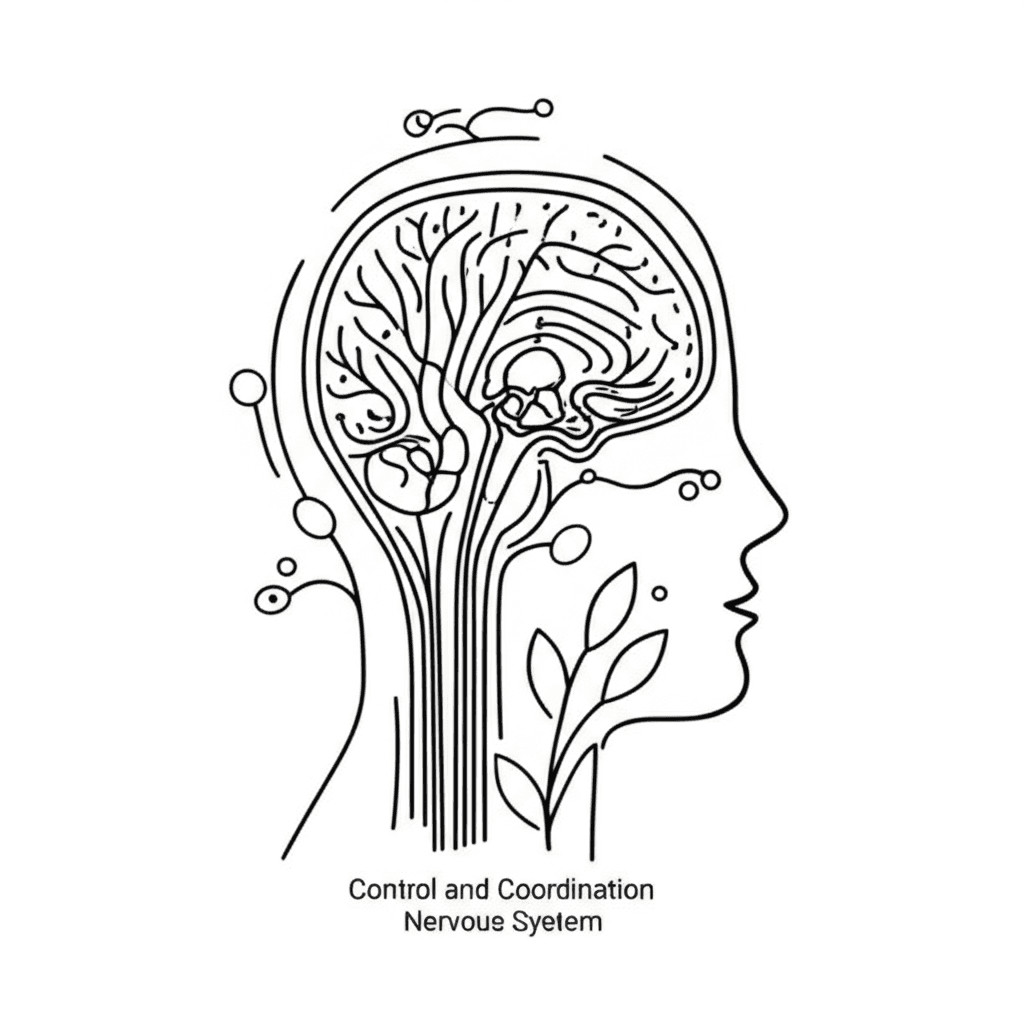
Introduction to Control and Coordination
Control and coordination are essential for the survival of living organisms. The nervous system and hormonal system work together to control and coordinate various bodily functions. In this blog post, we will delve into the world of control and coordination, exploring the nervous system, hormones, and plant responses.
The Nervous System
The nervous system is a complex system that consists of the central nervous system (CNS) and the peripheral nervous system (PNS). The CNS includes the brain and spinal cord, while the PNS includes nerves that connect the CNS to the rest of the body. The nervous system allows for rapid communication between different parts of the body, enabling organisms to respond quickly to changes in their environment.
Hormones and the Endocrine System
Hormones are chemical messengers that are produced by endocrine glands and play a crucial role in controlling and coordinating various bodily functions. Hormones can be classified into two main categories: steroid hormones and peptide hormones. Steroid hormones, such as estrogen and testosterone, are derived from cholesterol and can diffuse through cell membranes. Peptide hormones, such as insulin and growth hormone, are derived from amino acids and cannot diffuse through cell membranes.
Plant Responses
Plants also have complex systems that allow them to respond to their environment. Phototropism is the ability of plants to grow towards light, while geotropism is the ability of plants to grow in response to gravity. Plants also respond to touch and chemical stimuli, such as auxins and ethylene.
Conclusion
In conclusion, control and coordination are essential for the survival of living organisms. The nervous system, hormonal system, and plant responses all play crucial roles in allowing organisms to respond to changes in their environment. By understanding these systems, we can gain a deeper appreciation for the complexity and beauty of life.
Key Terms:
- Nervous system: a complex system that consists of the central nervous system (CNS) and the peripheral nervous system (PNS)
- Hormones: chemical messengers that are produced by endocrine glands
- Endocrine system: a system of glands that produce hormones
- Plant responses: the ability of plants to respond to their environment
Test Your Knowledge
Now that you've learned about Control and Coordination: Nervous System, Hormones, and Plant Responses, test your understanding with these interactive flashcards. You can save them to your collection for later study!
📚 Study Flashcards
Test your knowledge with these interactive cards
Control and Coordination Flashcards
Test your knowledge of control and coordination with these interactive flashcards.
Want to study these cards?
Save to your collection and track your progress
What is the main function of the nervous system?
#1What are hormones?
#2What is phototropism?
#3What is the difference between steroid hormones and peptide hormones?
#4What is the central nervous system (CNS)?
#5What is geotropism?
#6What are auxins?
#7What is the peripheral nervous system (PNS)?
#8💡 Study Tip
Try to answer each question before looking at the answer. Use the memory tips to create stronger mental connections!