
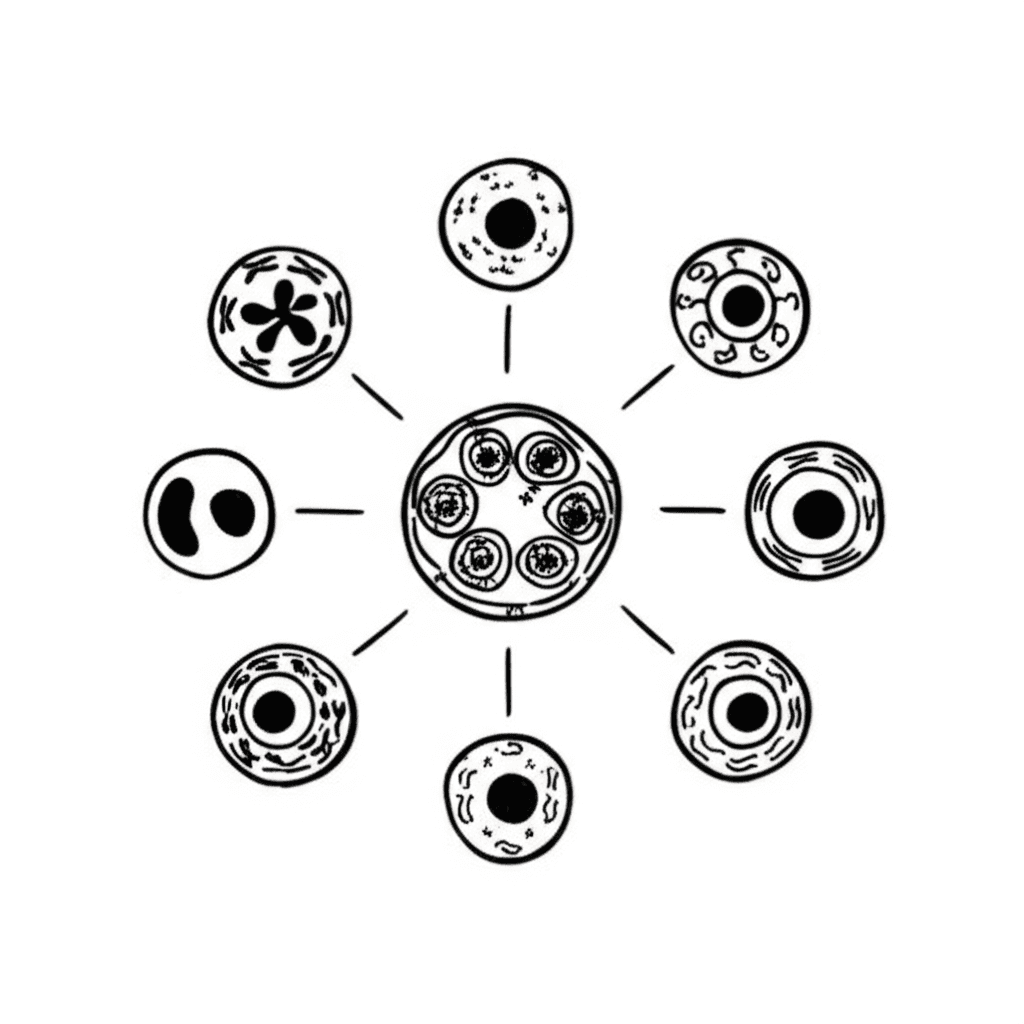
Introduction to Cell Division
The mitotic cell cycle is a critical process in biology that enables cells to grow, replicate, and divide. It consists of two main types of cell division: mitosis and meiosis. In this blog post, we will delve into the world of cell division, exploring the mitotic cell cycle, the differences between mitosis and meiosis, and the significance of cell division in living organisms.
The Mitotic Cell Cycle
The mitotic cell cycle, also known as the cell cycle, is the series of events that occur in a cell, leading to its division into two daughter cells. It consists of four stages: G1 (gap 1), S (synthesis), G2 (gap 2), and M (mitosis). The cell cycle is regulated by a complex system of checks and balances to ensure that cell division occurs correctly.
Mitosis
Mitosis is a type of cell division that results in two daughter cells that are genetically identical to the parent cell. It occurs in somatic cells, which are non-reproductive cells, and is essential for growth, repair, and maintenance of tissues. The process of mitosis involves the following stages:
- Prophase: The chromatin condenses into visible chromosomes, and the nuclear envelope breaks down.
- Metaphase: The chromosomes line up at the center of the cell, attached to the spindle fibers.
- Anaphase: The sister chromatids separate and move to opposite poles of the cell.
- Telophase: The nuclear envelope reforms, and the chromosomes uncoil to form chromatin.
- Cytokinesis: The cytoplasm divides, and the cell splits into two daughter cells.
Meiosis
Meiosis is a type of cell division that occurs in reproductive cells, resulting in four daughter cells that are genetically unique. It is essential for the production of gametes (sperm and egg cells) and is a critical process in the formation of a new individual. Meiosis involves two successive cell divisions: meiosis I and meiosis II.
Cell Division and Its Significance
Cell division is essential for the survival and reproduction of living organisms. It enables cells to grow, differentiate, and respond to environmental changes. In addition, cell division plays a critical role in the development and maintenance of tissues, as well as the repair of damaged tissues.
Real-World Applications
Understanding cell division has numerous practical applications in fields such as medicine, agriculture, and biotechnology. For example, knowledge of the cell cycle and cell division is crucial for the development of cancer treatments, as cancer cells exhibit uncontrolled cell growth and division.
Conclusion
In conclusion, the mitotic cell cycle, mitosis, and meiosis are fundamental processes in biology that underlie the growth, reproduction, and maintenance of living organisms. By understanding these processes, we can gain insights into the complex mechanisms that govern life and develop new strategies for addressing various biological and medical challenges.
Test Your Knowledge
Now that you've learned about The Mitotic Cell Cycle: Mitosis, Meiosis, and Cell Division, test your understanding with these interactive flashcards. You can save them to your collection for later study!
📚 Study Flashcards
Test your knowledge with these interactive cards
Cell Division Flashcards
Test your knowledge of the mitotic cell cycle, mitosis, meiosis, and cell division with these interactive flashcards.
Want to study these cards?
Save to your collection and track your progress
What is the main difference between mitosis and meiosis?
#1What are the four stages of the cell cycle?
#2What is the purpose of meiosis?
#3What is the difference between somatic cells and reproductive cells?
#4What is cytokinesis?
#5What is the role of spindle fibers in mitosis?
#6What is the significance of cell division in living organisms?
#7What is the relationship between mitosis and cancer?
#8💡 Study Tip
Try to answer each question before looking at the answer. Use the memory tips to create stronger mental connections!